
Where basement water comes from
| Source | Clue | Plumbing-side fix |
|---|---|---|
| Groundwater pressure | Water at the floor-wall joint after rain | Interior drain tile and sump |
| Surface water | Wet near walls with downspouts that dump close | Extend downspouts, regrade (not plumbing) |
| Plumbing leak | Water that appears with no rain | Leak detection and repair |
| Condensation | Damp air, sweating pipes and walls | Dehumidifier, insulation |
| Sewer or drain backup | Water at floor drains | Sewer cleaning and repair |
The first question is whether the water is coming from outside, from a pipe or from humid air. Treating the wrong source wastes money, so a plumber looks at all three.
Interior drainage, explained
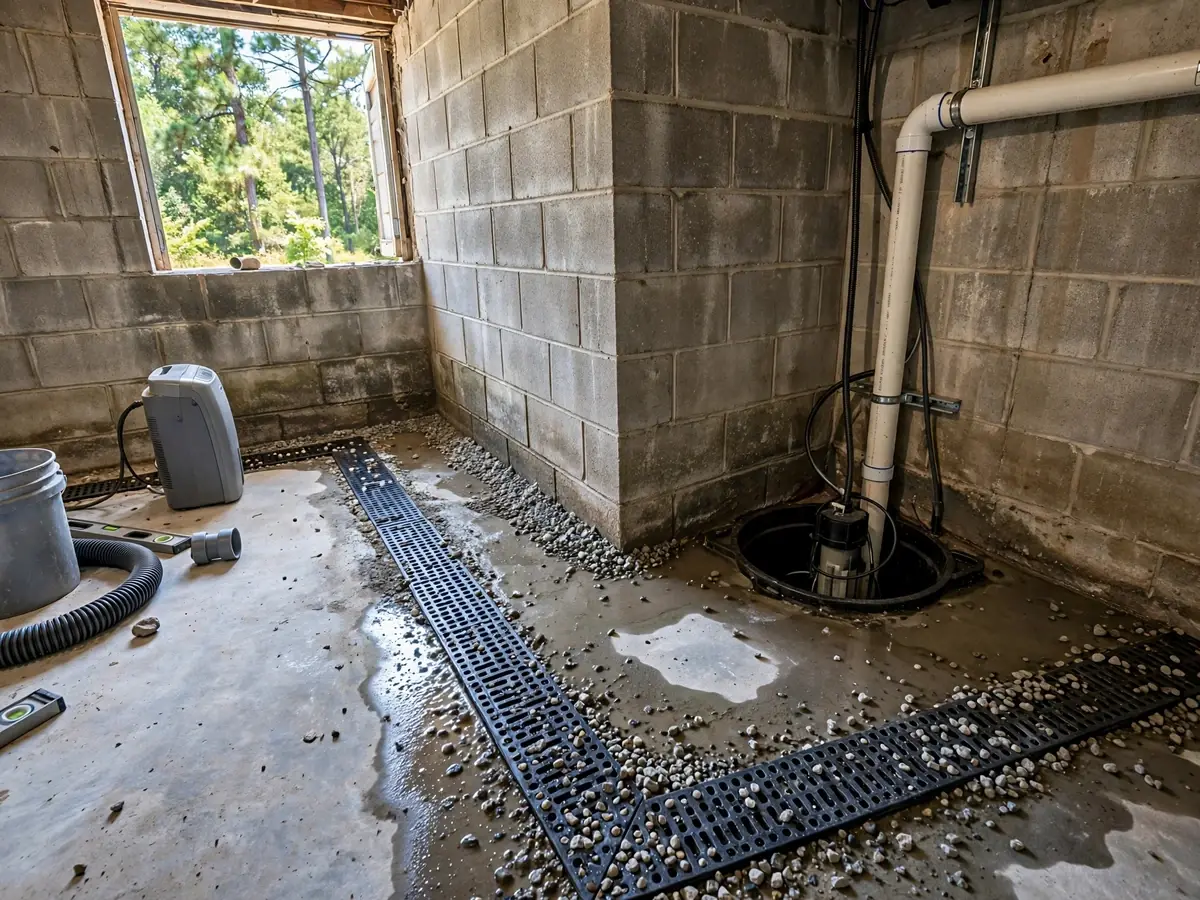
An interior drain system sits along the inside edge of the foundation, either in a channel cut into the floor or beneath it. Water that reaches the footing flows into the channel and runs to a sump pit, where a pump sends it outside.
It manages water pressure from below rather than trying to hold it back. For a home with a history of seepage at the floor-wall joint, it is a common plumbing-side fix, and it works with the sump pump you already have or a new one.
Basement taking on water?
Call us to schedule a visit.
The Cottage Grove ground conditions
The city sits above the Mississippi River in a part of the metro where bluffs and ravines meet the river valley. Ravine Regional Park, with its 515 acres, is one reminder that the land here is cut by drainage paths. Water follows the same paths under and around houses.
Homes near the river and lower areas may sit closer to the water table, and spring melt can raise it. Soils vary from sandy to clayey, so what drains well on one lot may not drain on the next. Ask a plumber to look at the actual pit and the actual basement, not a generic plan.
What to note before we arrive
- Where water appears and how long it takes after rain
- Whether the sump has been running more than usual
- Any past repairs, membranes or patches
- The age of the home and the sump pump
- Gutters, downspouts and grading around the foundation
A photo of each wet area helps a lot.
What plumbers do and do not do
Plumbing side
- Sump pits and pumps
- Interior drain tile and discharge lines
- Floor drains and sewer backups
- Leak detection and supply repair
Other trades
- Foundation crack injection and structural repair
- Exterior excavation and membranes
- Grading and landscape drainage
- Mold remediation
Foundation cracks and exterior waterproofing are other trades. We tell you if the cause of your water is outside plumbing, and we do not sell work that will not fix the problem. If water is entering because a pump has failed, sump pump repair is the first call.
What to expect after the fix
Interior drainage and a good sump can keep a basement dry in most conditions. They do not guarantee a perfectly dry space, particularly during extreme events. Keep gutters clean, downspouts extended and the sump tested.
A dehumidifier helps with dampness that does not come from seepage. Finish only what you are prepared to protect, and avoid storing valuables on the floor in a basement that has had water before.
Signs the problem is plumbing and not seepage
- The water appears with no rain or snowmelt
- The meter moves when every fixture is off
- Moisture is concentrated near a pipe, water heater or washer
- The sump pump runs on a dry day
- A floor drain bubbles when upstairs water drains
In each case the answer is different from interior drainage. A supply leak is a repair. A drain backup is a cleaning or a repair. We sort out which one you have before suggesting anything larger.
Code, permits and standards
The plumbing side of waterproofing, such as a sump pit and discharge, follows the Minnesota Plumbing Code. Structural repair and exterior waterproofing follow different rules and different trades, so we tell you plainly when a job is not ours.
Basement Waterproofing questions in Cottage Grove
A sump pump removes water that collects in a pit. Waterproofing manages how water reaches the pit, such as with interior drain tile. They work together.
No. Exterior membranes and excavation are other trades. We handle the plumbing side, including interior drainage, sump pits and discharge.
If water appears with no rain and the meter moves when fixtures are off, it may be a supply leak. A plumber can test it.
No method guarantees it in every condition. A properly sized system and a working pump greatly reduce water in most cases.
Yes. Our 24/7 line is answered nights and weekends. If a pump failed or a line burst, call right away.
We handle the plumbing side of basement water in Cottage Grove and nearby towns, Hastings included. See the service area page.