
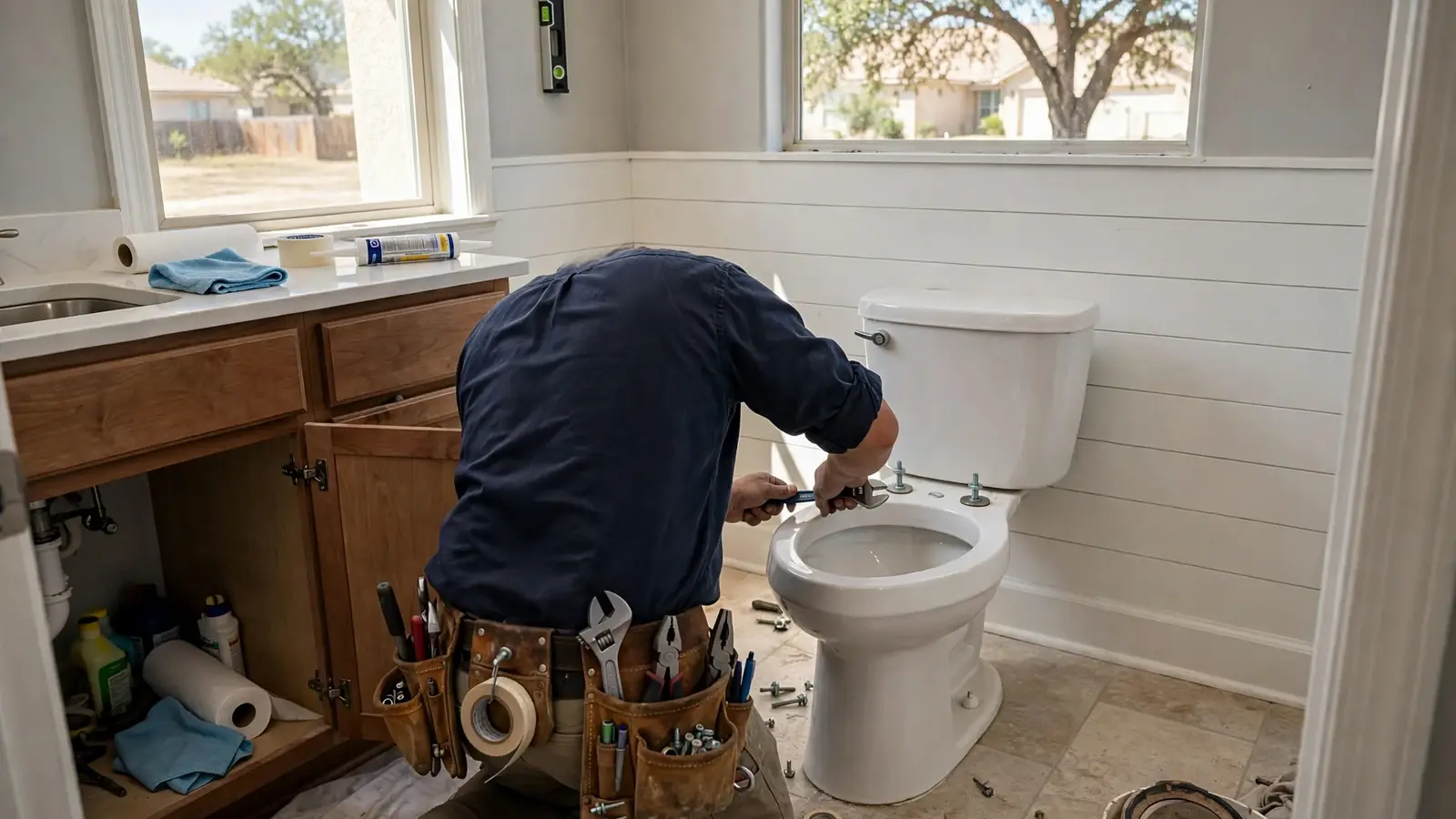
This guide explains how to tell if the flange is the problem, what options exist for a cast iron drain and why some jobs are better left to a plumber.
Signs the flange has failed
Toilet rocks
The bolts are loose or the flange ears are broken.
Water at the base
The wax ring cannot seal against a damaged or low flange.
Sewer smell
A bad seal lets gas escape.
Soft or stained floor
Long-term leaks have rotted the subfloor.
If you see any of these, shut off the water at the valve behind the toilet and plan to pull the toilet. Do not keep using a toilet that rocks, since the seal will fail.
Types of flanges
| Type | Where you see it | Notes |
|---|---|---|
| Cast iron flange | Older homes with cast iron drains | Part of the pipe or attached with lead and oakum |
| PVC or ABS flange | Newer homes | Glued to plastic pipe |
| Brass or lead flange | Older plumbing | Can corrode or crack |
| Repair ring | Retrofit | Bolted over a damaged flange |
A cast iron flange is a hub on the end of the pipe or a separate piece caulked into the hub. Replacing it can mean cutting the pipe, which is hard work in a tight space.
Your options for a damaged flange
Repair ring
- Fits over a damaged flange
- Bolts to the subfloor
- Keeps the pipe in place
- Good when the flange is intact but the ears are broken
Full replacement
- Cuts and replaces the flange or pipe
- Needed when the flange is badly corroded or detached
- May involve a repair coupling
- Best left to a plumber with cast iron experience
Cast iron work is harder than plastic. Cutting it needs a snap cutter or a saw, and old lead and oakum joints can contain lead. If your flange is attached with lead caulk, treat it carefully and ask a plumber.
Rocking toilet or leaking base?
Call and a licensed plumber can inspect the flange and floor.
How the work goes
Pull the toilet
Shut off the water, drain the tank and bowl, disconnect the supply line and lift the toilet off the bolts.
Inspect
Check the flange for cracks, rust and height, and check the subfloor for soft spots.
Repair or replace
Install a repair ring or replace the flange, and fix any rotted subfloor first.
Reset the toilet
Install a new wax ring and bolts, set the toilet and tighten evenly.
Flange height matters
The flange should sit at or slightly above the finished floor. A flange that is too low, often after new tile or flooring is added, leaves a gap that the wax ring cannot fill. The fix is a spacer or an extender, or a raised flange.
Check the height after any flooring change. It is a common cause of a toilet that leaks after a remodel.
When to call a plumber
If the floor is soft, the pipe is loose or the flange is lead and oakum, a plumber should handle it. A bad repair can leak into the subfloor for months before anyone notices.
If you see sewage or the toilet will not drain, treat it as urgent and call the 24/7 line.
Tools and materials
- A replacement flange or repair ring sized for your pipe
- Stainless steel screws and closet bolts
- A new wax ring or a wax-free seal
- Pry bar, putty knife and a hacksaw or reciprocating saw for subfloor repair
- Rags, gloves and a respirator for old debris
- A level to check the height and the toilet seat
Common mistakes
- Stacking wax rings to fill a gap, which fails over time
- Using screws that are too short to hold the ring in solid subfloor
- Forcing a flange into a pipe that is not round
- Overtightening bolts and cracking the base of the toilet
- Skipping the subfloor repair when the wood is soft
The floor underneath is the foundation of the repair. A flange screwed into rotten plywood will come loose again, so cut out and replace damaged subfloor before you set anything on top of it.
Cottage Grove note: older homes and inspections
Homes with cast iron drains are typically older ones. Work on those drains falls under the Minnesota Plumbing Code, and city inspectors handle inspections where the city is the administrative authority. Follow the flange manufacturer's guidelines for bolt spacing and seal type.
A flange repair inside a bathroom is often a repair rather than a new installation, but ask the City of Cottage Grove building department if you are unsure. For related fixes, see toilet repair. Homeowners near Hastings can ask their city's office.
A rotted flange under old cast iron is not a job to guess at. See the towns we cover and the Hastings page to confirm we dispatch to your address.
Questions homeowners ask
It is heavy, gray or rust-brown and often joined to the drain with lead and oakum. Plastic flanges are white or black and light.
Not reliably. The seal needs a sound, level flange.
A metal or plastic ring that bolts over a damaged flange to give the toilet a new base to seal on.
It depends on the flange type, floor condition and access. We confirm a clear price before work starts.
Old caulked joints can contain lead. Avoid grinding or sanding them and ask a plumber.
The City of Cottage Grove building department.