
This guide walks through each requirement in plain terms, so you know what to ask before you buy a unit or request a quote in Cottage Grove.
The five things a tankless heater needs
| Requirement | Why it matters | Common issue |
|---|---|---|
| Gas supply | A tankless unit burns a lot of fuel at once | The existing gas line is too small |
| Venting | Exhaust has to leave the house safely | Old flue is not approved for the unit |
| Condensate drain | Condensing units produce acidic water | No drain nearby |
| Electrical | Controls, fans and igniters need power | No outlet within reach |
| Water lines | Flow and pressure set performance | Undersized lines or low pressure |
If any one of these is missing, the plumber adds work and cost. Checking all five before a quote is how you avoid surprises.
Gas line sizing
A tankless heater is rated in British thermal units per hour, and larger models draw far more fuel than a tank heater of the same household size. A line that served a tank may be too small, which causes the unit to shut down or deliver less hot water at peak demand.
A plumber measures the line length and the total load of all gas appliances, then decides whether the existing pipe will carry the extra. Sometimes a short upgraded run is all it takes.
Venting: where installs get complicated
Tankless heaters use different venting from a tank. Many modern condensing units are efficient enough that their exhaust is cool, so they vent through plastic pipe, often straight through a wall or up through the roof. Non-condensing units run hotter and need stainless steel venting.
The manufacturer's installation manual specifies the material, the maximum length, the number of elbows and the clearances. Follow it exactly, since a wrong vent can cause carbon monoxide or a failed inspection. The vent often decides where in the house the heater can go.
Planning a tankless install?
Call and a licensed plumber can check gas, vent and drain before quoting.
Condensate: the drain you need
Condensing units pull extra heat from exhaust gas, which turns water vapor into liquid. That condensate is mildly acidic. It has to run to a drain, and many installations include a neutralizer cartridge that raises the pH before the water enters your plumbing.
A floor drain, a laundry standpipe or a condensate pump can serve. The cartridge needs checking from time to time. If no drain is nearby, plan for the pump and a place to run the line.
Electrical and water connections
- A standard outlet or a dedicated circuit, depending on the model
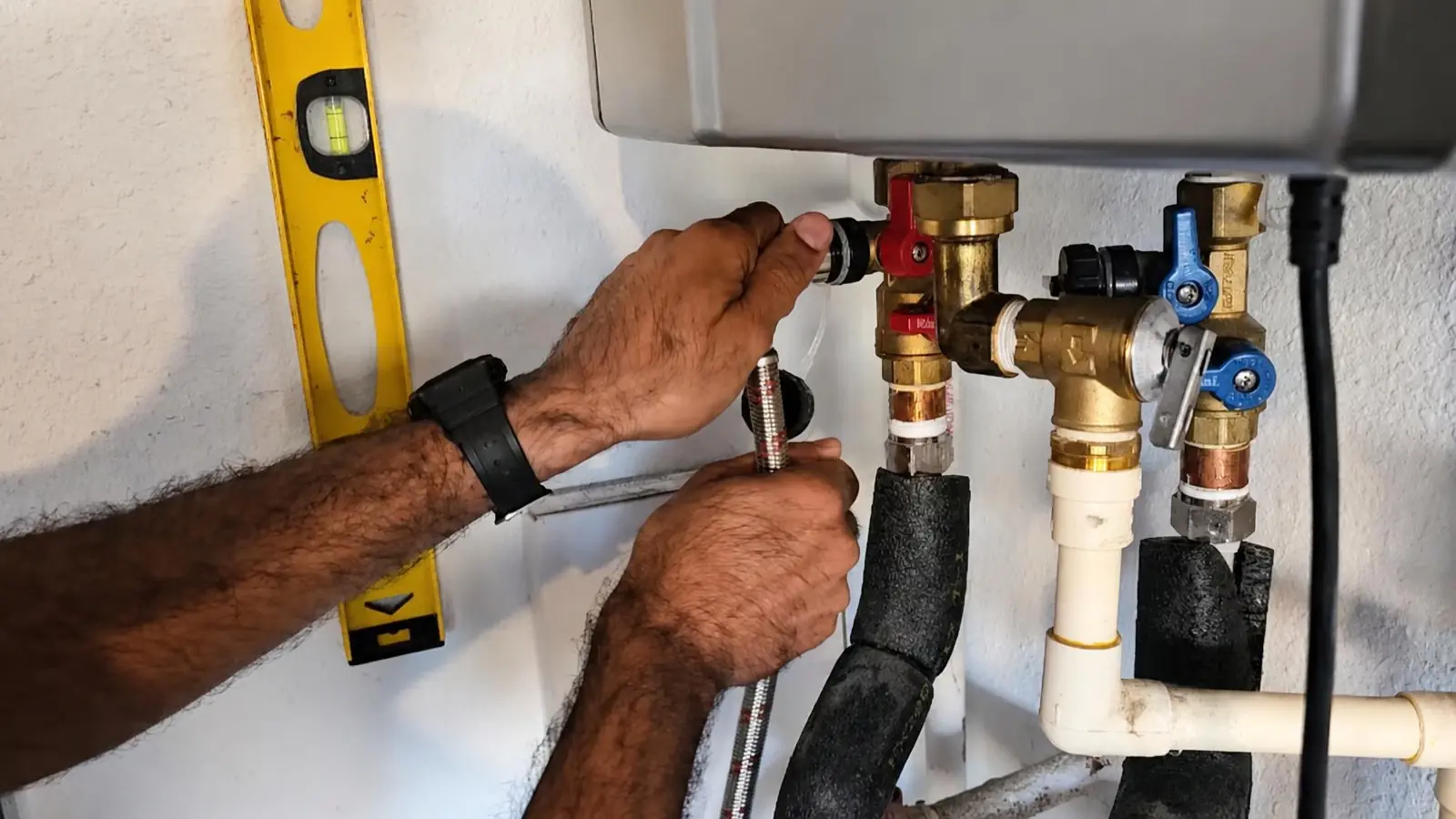
- A shutoff and service valves on both hot and cold lines for flushing
- A pressure relief valve on the water side
- A hose bib or purge port for descaling
- Room around the unit for service, as the manual requires
Questions to ask before you buy
- What is the maximum gas input and what line size does it need
- Which vent material and length does the manufacturer allow
- Where will condensate drain
- What is the flow rate at my coldest winter inlet temperature
- Is a permit required and who pulls it
The answers shape both cost and satisfaction.
Sizing for a Minnesota winter
Incoming water in winter can be far colder than in summer. A unit that performs well in July may struggle in January with two showers running. Sizing should use the winter inlet temperature and the total flow you need at once.
If sizing looks tight, a larger unit or two small ones may fit. A tank may be a better choice for some households, and an honest plumber will say so.
Tankless is a fit when
- The gas line and vent can be upgraded
- You want to free floor space
- Your household has steady hot water use
- You plan to stay in the house for years
A tank is a fit when
- Venting a new unit would be costly
- Your budget is limited
- Peak demand is high and short
- You want a simple, familiar system
Surprises that raise the cost
The unit itself is only part of the price. The jobs that surprise people are a gas line upgrade, a new vent route through a finished wall, a condensate pump when no drain is nearby and a new circuit for the controls. Each is reasonable on its own, and together they can change the budget.
Ask for a written scope that lists each of them. If a bid leaves one out, ask why. A good plumber walks the path from the old heater to the new location, checks the gas meter size and looks at the vent route before giving a number.
It also helps to ask what happens if the old flue is abandoned. A cold, unused chimney should be capped or lined properly, since a leftover opening can draw air and cause problems with the other appliances.
Cottage Grove note: permits and inspections
Gas, venting and water all meet at a tankless unit, and the Minnesota Plumbing Code covers the water side. The state inspects through the Minnesota Department of Labor and Industry, or through a city that holds that authority for its own area.
A tankless install touches gas, venting and water, so ask the City of Cottage Grove building department what permits and inspections apply to your address. A plumber coordinates the steps, but you should know them before work starts. For homes in Hastings, ask that city's office.
If you decide on a tankless unit, see our tankless water heater service page for installation and flushing. If your tank has already failed, water heater replacement is the quicker route.
Planning a tankless swap outside Cottage Grove itself? Check the towns we cover and the Hastings page before you plan the gas and venting work.
Questions homeowners ask
Not always. It depends on the unit's input and the length and size of your existing line. A plumber measures and calculates before quoting.
Usually not. Tankless units need venting approved by the manufacturer, and old chimneys often do not qualify.
Condensing models do, for condensate. Non-condensing models do not produce condensate in the same way, but you still want a drain for flushing.
A straightforward swap can take a day. New gas, venting or electrical work adds time.
If sized for winter inlet temperatures, yes. Undersizing is the usual cause of disappointment.
The City of Cottage Grove building department. Ask what a gas appliance and venting installation require.