
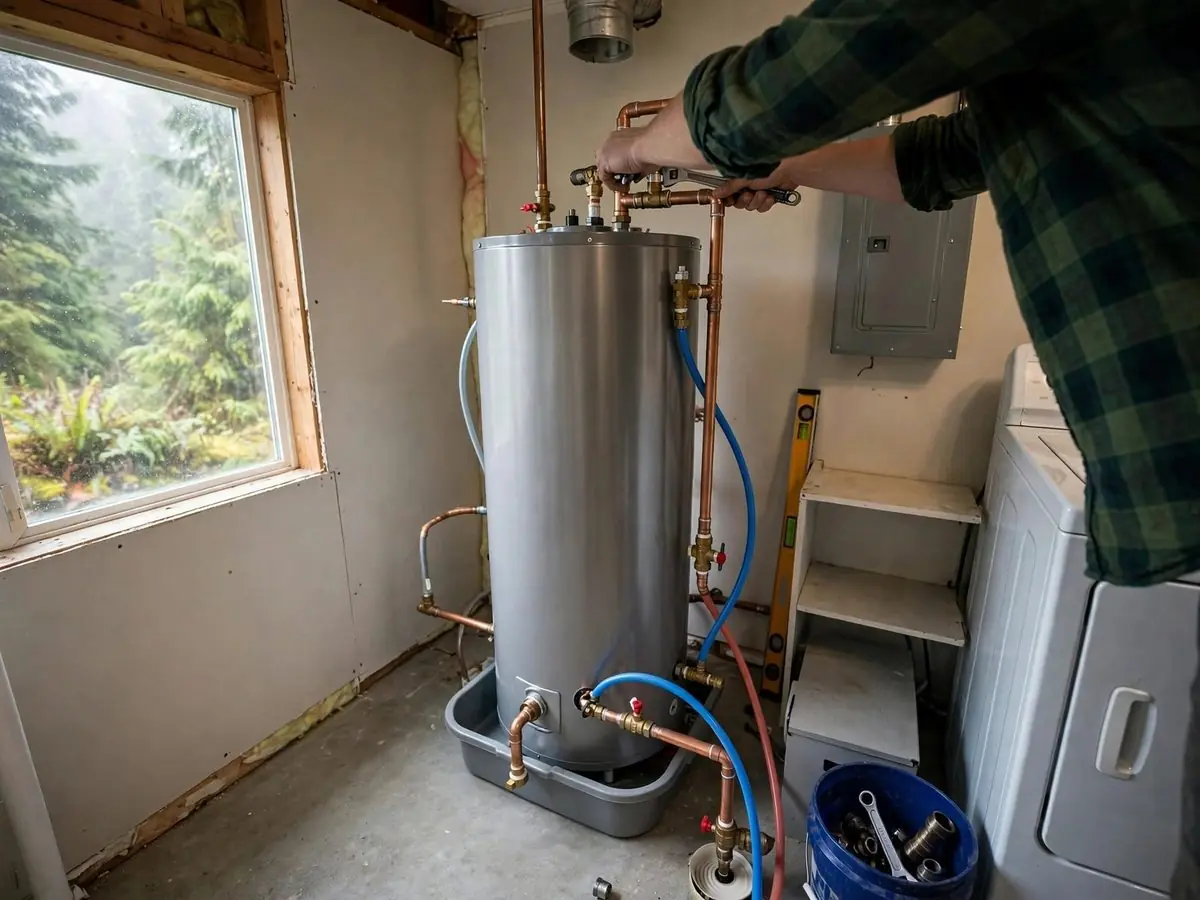
What a good installation covers
A water heater is more than the tank. The installation includes shutoff valves, a temperature and pressure relief valve with a proper discharge pipe, flexible or hard-piped connections, a drain pan where needed, correct venting for gas units and an electrical or gas connection that meets code.
Shortcuts show up later as leaks, backdrafting or a relief valve that drips. Doing each of those parts right the first time is what makes the heater last.
Parts of a proper install
- Shutoff valve on the cold supply
- Temperature and pressure relief valve with a full discharge pipe
- Drain pan with a drain line when the heater sits above finished space
- Dielectric or approved fittings where dissimilar metals meet
- Expansion tank when the supply has a closed system
- Secured venting with correct slope and clearances on gas units
Missing a single item on this list is the usual reason an install fails an inspection.
Choosing a type
| Type | Typical household | Notes |
|---|---|---|
| Tank, gas | Existing gas service and flue | Fast recovery, needs a vent |
| Tank, electric | No gas, simple location | Easy install, uses more power |
| Heat pump hybrid | Efficiency-focused homes | Needs room, air flow and a drain |
| Tankless, gas | Steady demand, limited space | Needs venting and gas sizing |
| Tankless, electric | Small loads and point of use | Often needs a larger electrical panel |
For a deeper look at endless hot water units, the tankless water heater page explains the venting and flushing that tankless systems need.
Planning a new water heater?
Call to schedule an installation visit.
Location and space
In most east metro homes the heater lives in the basement or a utility room. That is good news, since a leak can be contained by a drain pan and a floor drain. In a finished basement or an upstairs closet, a drain pan and a discharge path are essential.
If you are moving a heater to a new location, the plan should include new venting, a new gas or electrical connection and clearance for service. Those steps are why a planned installation costs differently from a straight swap.
Heat pump water heaters in a cold climate
Heat pump water heaters draw heat from the surrounding air, so they work best in a space that stays above freezing and has room to breathe. A basement utility room next to the furnace is often a good fit, though they can cool the space slightly and produce condensate that needs a drain.
They use far less electricity than a standard electric tank. They also cost more up front and may qualify for rebates, so check what is available for your utility and your household before you decide.
What to expect on install day
Pre-visit check
We confirm the unit, fuel, venting and any permit requirements.
Setup
Old equipment is removed and the area is prepared, including the pan and shutoffs.
Connection
Water, gas or electric, venting and discharge lines are connected and secured.
Test
We check pressure, temperature, leaks and draft, then explain how to use and maintain the heater.
If your current heater has already failed, emergency water heater replacement is the faster path. This page is for planned work.
Questions to settle before scheduling
- Which fuel and size best fit your household
- Where the heater will sit and whether the space allows it
- Whether venting, a gas line or an electrical circuit needs work
- Whether a permit applies in your city
- Whether an expansion tank or a mixing valve is a good idea
Gas, electric and combustion air
Gas heaters need a supply of fresh air for combustion and a vent that carries exhaust outside. A heater in a tight utility room or a finished closet may need louvers or a direct vent design. Electric units need the right breaker and wire size.
These requirements are the reason a unit that fit the old heater does not always fit the new one. Checking them first prevents surprises on install day and keeps the heater safe and efficient.
Code, permits and standards
A new installation must meet the Minnesota Plumbing Code, and the manufacturer's guidelines set clearances, venting and electrical needs. Cities often act as the administrative authority, so ask the City of Cottage Grove building department what it requires.
Water Heater Installation questions in Cottage Grove
A like-for-like tank install usually takes a few hours. Moving the heater, changing fuel or adding venting takes longer, and we explain the plan before starting.
Often yes. Cities set their own rules, and the plumber handles the permit steps. Ask your local building department for specifics.
Yes. They need open space around the unit and a condensate drain, and we help you decide whether your space suits one.
If your system has a pressure regulator, backflow preventer or other closed supply, an expansion tank is often recommended. A plumber measures pressure and advises.
It depends on the number of people, bathrooms and how much hot water you use at the same time. We help you size it before ordering.
We install in Cottage Grove and nearby towns, Hastings among them. The service area page confirms what is covered.